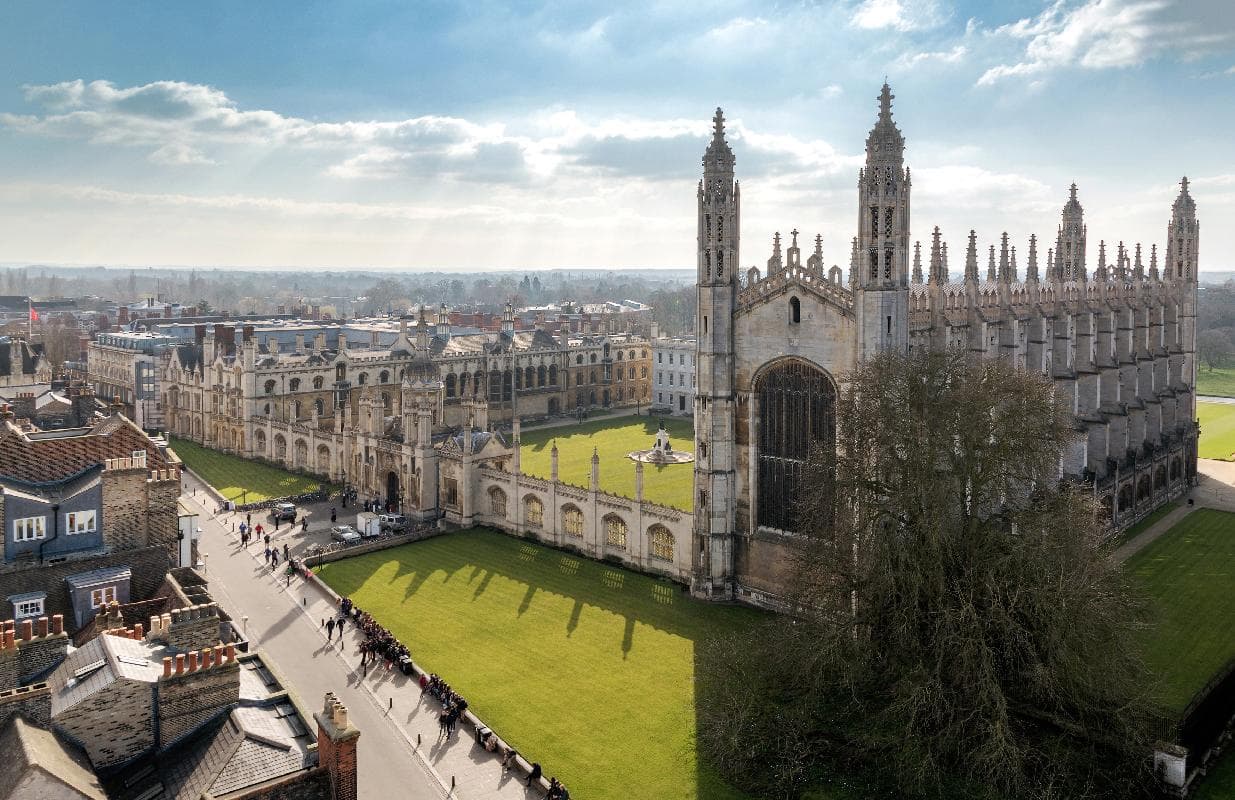
Overview
The University of Cambridge is one of the world's oldest and most prestigious universities, renowned for its rigorous academic standards and unique collegiate system. Located in the historic city of Cambridge, it is a global powerhouse in science, technology, and the humanities.
Cambridge operates on a "supervision" system (similar to Oxford's tutorials), where students are taught in very small groups by subject experts. This fosters intense intellectual debate and personalized learning. It is consistently ranked among the top universities globally and is known for producing more Nobel Prize winners than any other institution.
What Cambridge Looks For in Applicants
Academic Ability and Potential
Cambridge is unapologetically academic. The admissions committee is looking for students with the highest intellectual potential, regardless of background. They want to see a trajectory of high performance and the ability to handle intense workloads.
Super-Curricular Engagement
Unlike the US focus on "well-rounded" extracurriculars, Cambridge seeks "super-curricular" engagement. This means exploring your chosen subject beyond the school curriculum—through reading, research, olympiads, or relevant projects. They want to see that you genuinely enjoy your subject.
Critical Thinking and Teachability
The interview and admissions tests are designed to see how you think, not just what you know. Selectors look for students who can apply existing knowledge to new problems and who respond well to the supervision style of teaching—showing flexibility and a willingness to learn from mistakes.
Academic Profile and Testing
Successful Cambridge applicants typically have impeccable academic records.
Admissions Tests (Major Updates for 2026 Entry)
Cambridge has overhauled its testing regime. Most applicants must register for these tests by mid-September and sit them in October.
Application Requirements
Applications are submitted through UCAS, but Cambridge has additional unique steps:
Deadlines
Teacher Reference
Cambridge values references that focus heavily on academic performance. The strongest references provide:
Super-Curricular Activities
Cambridge admissions officers are not significantly influenced by general extracurriculars like sports or leadership unless they relate to the course.
Admissions Assessments & Interviews
The Interview is the distinctive feature of Cambridge admissions. It resembles a mini-supervision.
Admissions Strategy Tips
Choose Your College Wisely (or Open)
You can apply to a specific college or make an "Open" application. While colleges differ in accommodation and vibe, they do not differ in academic quality. Don't agonize over this; the "Pool" system ensures the best students get a place somewhere.
Master the Entrance Exam
The ESAT/TMUA/LNAT are often the biggest hurdle. Start preparing months in advance. These scores determine whether you get an interview.
Demonstrate "Teachability"
In your interview, don't try to be perfect. Be curious. If you don't know an answer, ask clarifying questions. Show them you are someone they would enjoy teaching for three years.
Is Cambridge the Right Fit?
Cambridge is ideal for students who live and breathe their subject. If you enjoy deep, focused study, thrive on intellectual challenge, and want a university experience centered around small-group academic discussion, Cambridge is likely the perfect fit.
Get Guidance for University of Cambridge
We'll match you with a mentor who knows University of Cambridge inside and out.