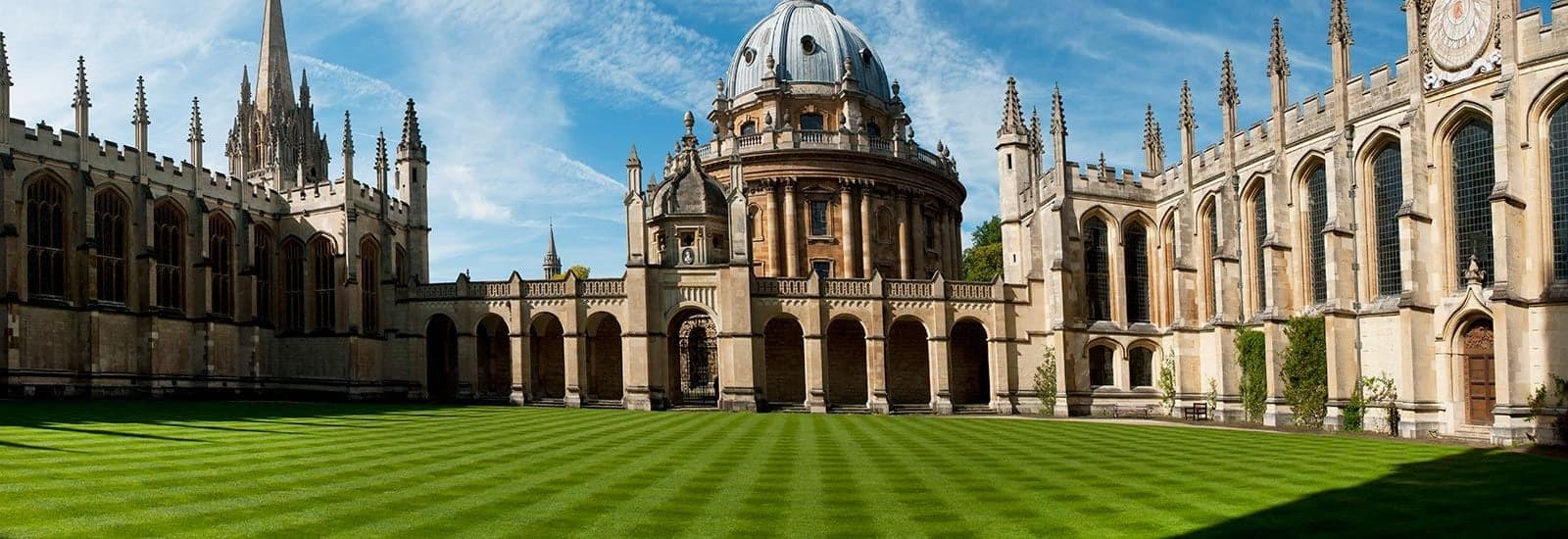
Overview
The University of Oxford is the oldest university in the English-speaking world. Like Cambridge, it is a collegiate research university known for its personalized "tutorial" teaching system. Oxford is situated in a bustling medieval city and offers a diverse range of rigorous courses. It is famed for its Politics, Philosophy, and Economics (PPE) course, as well as its strength in Humanities, Sciences, and Medicine.
What Oxford Looks For in Applicants
Intellectual Curiosity & Flexibility
Oxford seeks students who read widely and think deeply. They look for applicants who can analyze complex new information and adapt their arguments when presented with new evidence—a key skill for the tutorial system.
Academic Precision
Oxford courses are demanding. Admissions tutors look for precision in thought and writing. They value quality of argument over quantity of knowledge.
Self-Motivation
The Oxford system requires significant independent study. Successful applicants are self-starters who go beyond the syllabus because they are genuinely fascinated by the material.
Academic Profile and Testing
Admissions Tests (2026 Updates)
For 2026 entry, Oxford is aligning with Cambridge under the new UAT-UK framework.
Application Requirements
Deadlines
Teacher Reference
References should focus on your academic potential. Tutors want to know if you are at the top of your cohort and if you can handle the intense reading and writing load of an Oxford degree.
Super-Curricular Activities
Oxford cares little for "leadership" or "volunteering" unless it builds academic skills.
Admissions Assessments & Interviews
The Interview
Oxford interviews are legendary for their abstract questions, but they are grounded in logic.
Admissions Strategy Tips
The "Tutorial" Fit
Oxford revolves around the tutorial—an hour-long meeting between 1–3 students and a professor. Ask yourself: Do I enjoy defending my ideas? Can I handle having my work critiqued intensely every week?
Test Prep is Priority #1
For courses like PPE, Maths, or Engineering, the admissions test is the primary filter. A high score is often more important than a perfect GPA for getting an interview.
Read, Read, Read
For humanities, deep reading is non-negotiable. Don't just drop names; be ready to discuss the arguments of the books you mention.
Is Oxford the Right Fit?
Oxford is for the argumentative, the analytical, and the deeply curious. If you want a university experience that challenges your worldview weekly and places you in direct conversation with world-leading experts, Oxford is the place.
Get Guidance for University of Oxford
We'll match you with a mentor who knows University of Oxford inside and out.